
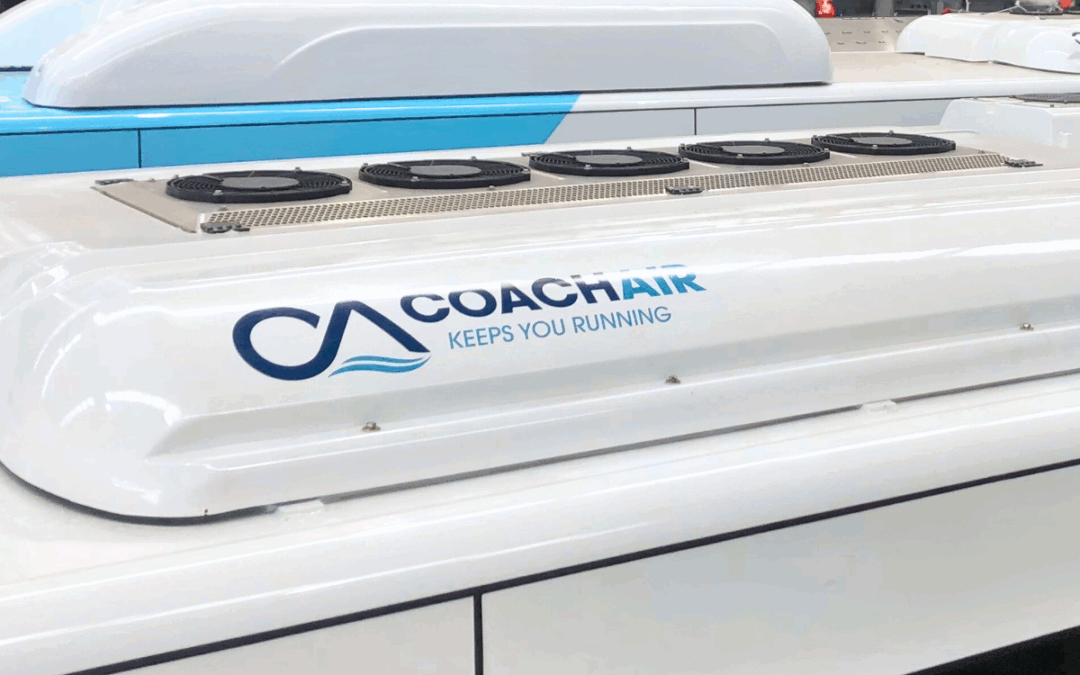
Keeping passengers and drivers comfortable is a top priority for every bus or coach operator, and Australia’s constantly changing climate provides additional challenges.
A HVAC system consists of ‘Heating, Ventilation, and Air Conditioning’. These features are essential for each type of bus and coach, and they require regular care and maintenance to remain effective and functional.
At Coachair, we’ve been working with bus and coach HVAC systems for decades, providing installation, spare parts, servicing, and maintenance to operators across the entire country. In our view, that means there’s nobody better placed to help you learn the basics of bus HVAC systems.
The Four Main Components of bus HVAC
Bus and coach air conditioning uses a refrigeration cycle, similar to the one used in cars and household fridges. The system uses a chemical refrigerant that switches between a gas and a liquid in order to absorb and release heat.
The components needed for this process to work effectively in a bus include:
- Compressor
- Condenser
- Expansion valve
- Evaporator
The Compressor:
Similar to the function of a heart, the compressor’s job is to pump the refrigerant around the system, taking the low-pressure, low-temperature refrigerant away from the evaporator and compressing it into its other form as a high-pressure, high-temperature gas. This is a crucial step for starting the cooling cycle.
The Condenser:
The condenser essentially operates as a heat exchanger, taking the hotter high-pressure gas provided by the compressor and flowing it through a coil where ambient air blows over it, causing the refrigerant to cool and condense. After this process, the refrigerant turns back into a high-pressure liquid, with the heat absorbed from inside the bus then released outside.
Expansion Valve:
This component controls the flow of the liquid refrigerant as it enters the evaporator, causing it to rapidly reduce the pressure and forcing the liquid to expand and cool down significantly, preparing it for the next stage.
Evaporator:
This is where the magic happens for drivers and passengers. With cold, low-pressure liquid now flowing through the evaporator coil, a fan will blow the warm cabin air over it. As it absorbs the heat from the cabin, the refrigerant begins to evaporate and turn itself back into a low-pressure gas, with the pleasant side effect of cooling and dehumidifying the air around the bus.
The low-pressure gas returns to the compressor, and the cycle starts all over again.
Each HVAC system has different capacities, fan efficiency, and compressor configurations, offering bus and coach operators a variety of options to select from. Coachair offers models for diesel and electric vehicles, along with ‘through life’ support to provide easy and reliable maintenance and spare parts throughout your HVAC system’s life.
What Makes Bus and Coach HVAC Different?
The fundamental principles of all HVACs are the same, but it’s important to recognise that bus and coach HVAC systems need to deal with tougher conditions and needs than something smaller or simpler like a car.
With constantly varying conditions, including large air volumes, heat loss or gain through windows, cabins full of passengers, and a regular flow of new heat from doors opening.
At Coachair, we understand the unique demands of the Australian climate and the effect it has on HVAC systems. Coachair’s range of systems offers efficient, reliable cooling and heating year-round in all weather conditions.
We’re the one-call-stop for all your bus and coach air conditioning needs. From purchase and installation to ongoing service and maintenance, the Australian experts are just a call away – call us on 1300 BUS AIR (1300 287 247) or contact us to discuss your needs.